| ANTHRAX - CLINICAL MANIFESTATIONS IN THE UPPER AERODIGESTIVE TRACT
B.anthracis the agent causing anthrax has a nearly worldwide distribution, existing in the soil in the form of extremely resistant spores and causing infection in humans and in farm and wild animals who have grazed on contaminated land or ingested contaminated feed. Anthrax cases are seen fairly commonly around Pondicherry. Under natural conditions, humans acquire anthrax infection from contact with infected animals or contaminated animal products, such as hides, wool, hair, and ivory tusks.
Clinical Features:- More than 95 percent of naturally occurring anthrax is the cutaneous form. The spore is introduced at the site of a cut or abrasion, usually on the arms, face or neck. The primary lesion a painless, pruritic papule appears one to seven days after the introduction of the endospore. Within one to two days, small vesicles surround the papule, which are filled with clear or serosanguineous fluid. A striking, nonpitting, gelatinous edema surrounds the lesion. Low-grade fever and malaise are frequent The vesicle ruptures, undergoes necrosis, and enlarges, forming an ulcer covered by a characteristic black eschar.
Inhalational Anthrax [wool sorter's disease] -The classic clinical description of inhalational anthrax is that of a biphasic illness. After an incubation period of one to six days, it appears with mild fever, malaise, myalgia, nonproductive cough, and some chest or abdominal pain. The second phase begins abruptly and involves further fever, acute dyspnea, sweating, and cyanosis. Stridor is present in some patients because of extrinsic obstruction of the trachea by enlarged lymph nodes, mediastinal widening, and subcutaneous edema of the chest and neck. The second stage of illness is rapidly progressive, with shock, associated hypothermia, and death occurring within 24 to 36 hours; Very rarely, the primary lesion of inhalational anthrax has occurred in the nasal mucosa or paranasal sinus. The nasal mucosa is dusky, congested and edematous. The nasal cavities are filled with a thick gelatinous nasal discharge. There is marked facial edema "malignant edema" which starts in the neck to involve the face later. This helps to distinguish it from edema due to sinusitis and facial cellulitis. Inhalation Anthrax of the nose and PNS may be differentiated from Endemic parotitis and Angioneurotic edema.
Oropharyngeal anthrax:- The symptoms include a severe sore throat, fever. dysphagia, and sometimes respiratory distress, which are caused by associated marked lymphadenitis and massive edema. Oral or pharyngeal ulcers covered with a pseudomembrane may be seen. The symptoms of gastrointestinal anthrax appear two to five days after the ingestion of undercooked meat containing spores and consist of nausea, vomiting, fever, and abdominal pain severe, 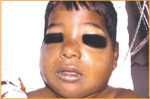 bloody diarrhea and signs suggestive of an acute abdomen. The primary intestinal lesions are ulcerative and occur mainly in the terminal ileum or caecum. Gastric ulcers may be associated with hematemesis. Hemorrhagic mesenteric lymphadenitis is also a feature of gastrointestinal anthrax, and marked ascites may occur. bloody diarrhea and signs suggestive of an acute abdomen. The primary intestinal lesions are ulcerative and occur mainly in the terminal ileum or caecum. Gastric ulcers may be associated with hematemesis. Hemorrhagic mesenteric lymphadenitis is also a feature of gastrointestinal anthrax, and marked ascites may occur.
Continued...
|
